


In mid-to-late fall, when the Philo Ridge Farm garden team is harvesting chicories and winter squash for the Market and our dining programs, they’re also tending young stalks of winter rye and oats that won’t become part of any fall meal. These grains are cover crops, sown in early fall to protect and revitalize our gardens over the winter by preventing erosion and adding rich nutrients to the soil.
Since our founding in 2012, Philo Ridge Farm’s mission has been to produce healthy, delicious food using techniques like cover cropping that restore and sustain the health of our working landscape. This farming approach is known as “regenerative” because it seeks to actively improve soil composition, water quality and retention, and ecosystem biodiversity, in contrast to conventional farming techniques that extract nutrients and degrade land, water, and ecosystem health over time.
Regenerative agriculture is focused on the future of the land and the communities it supports, prioritizing practices that help build healthy, resilient food systems. It’s a concept that’s gaining attention and support from people concerned about the environment and climate change, and those looking more closely at the connection between food production methods and their personal health. But while regenerative agriculture is gaining attention, questions remain around what it looks like in practice, whether it actually delivers on its promised benefits, and how it impacts the food on your plate.
Regenerative vs. organic
Organic farming focuses on inputs. It prohibits the use of synthetic chemicals and genetically modified organisms (GMOs) that can harm natural ecological systems. Regenerative farming focuses on outcomes. Most regenerative farming systems incorporate the tenets of organic farming into a larger set of agricultural practices aimed at not only reducing harm but actively restoring balance and long-term viability to working farmland ecosystems.
At Philo Ridge Farm, we use the term “organic regenerative agriculture” to convey this relationship; avoiding synthetic pesticides and fertilizers and using organic inputs is an important part of our integrated, whole-systems approach to improving land health and resiliency.
While there are currently no formally defined regulations governing regenerative farming practices, as there are for organic farming, most regenerative agriculture advocates and practitioners follow a core set of outcome-based pillars:
Build healthy soils
Increase water retention and purity
Enhance biodiversity and ecosystem resilience
Encourage carbon sequestration
In addition to avoiding synthetic chemical inputs, regenerative agriculture techniques include reduced- or no-till farming, regular crop rotation and the use of cover crops, rotational livestock grazing, compost application, planting native perennials, and restoring native wildlife habitats. The varying needs and attributes of individual landscapes determine what regenerative agriculture looks like in practice.

Some private organizations are working to codify what these regenerative agriculture pillars look like in practice by defining criteria for certification. Programs like Regenerative Organic Certified, Food Alliance Certified, and others offer guidance and recognition for growers and producers using regenerative practices, and help consumers find and support them.
The promise of regenerative agriculture
Historically there’s been limited data on the short- and long-term impacts of regenerative agriculture, but emerging research increasingly supports practitioners’ claims and makes a strong case for implementing regenerative practices across our agricultural systems.
From the beginning, we’ve used Philo Ridge Farm as a living laboratory for studying the impacts of transitioning conventionally farmed land to regenerative practices. We see the outcome of our regenerative methods on the farm every day in its thriving gardens, pastures, and wildlife ecosystems, but measuring and documenting our results produces real data we can share with other farms across Vermont and beyond interested in making the same transition.
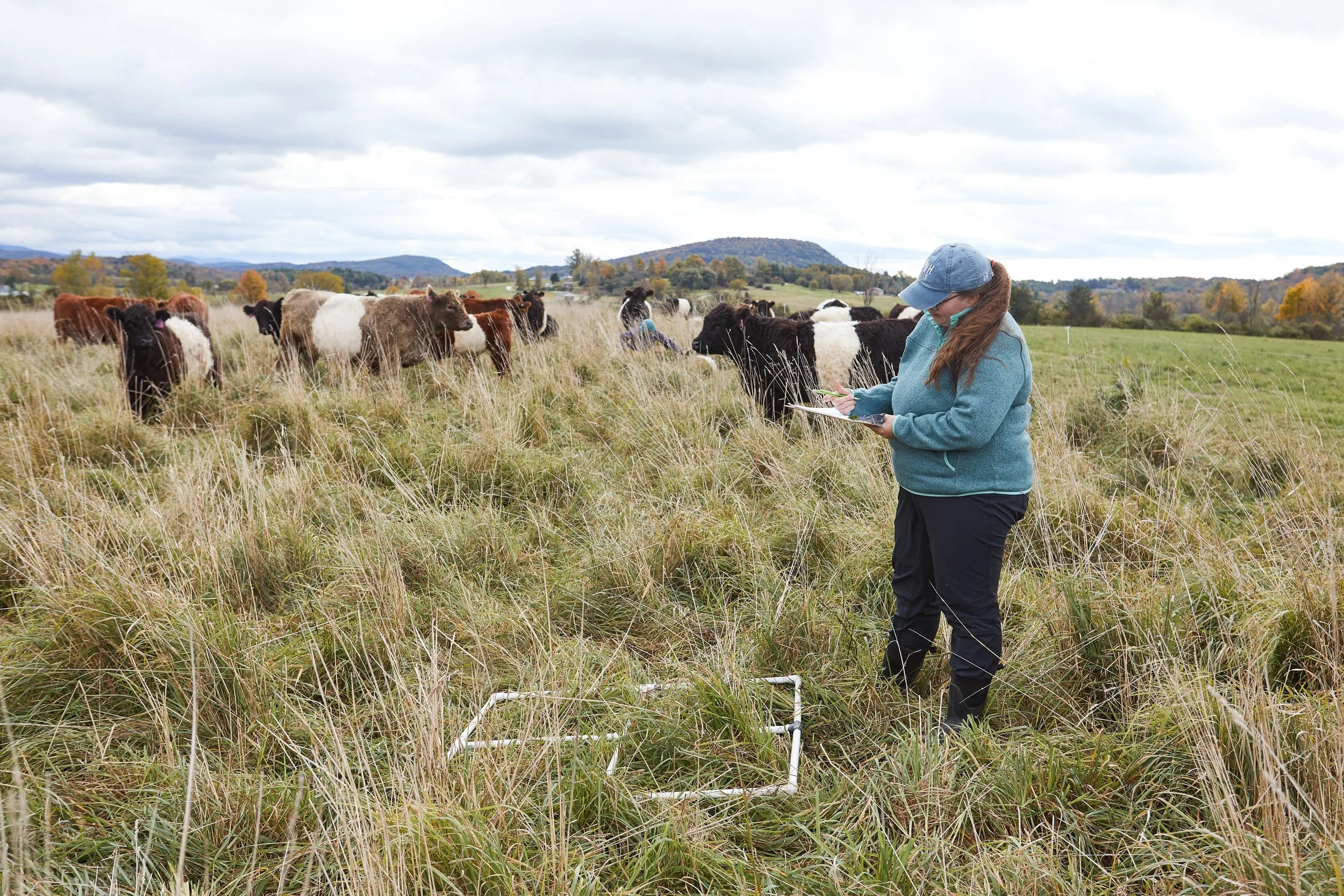
“While the benefits of our practices may be apparent on the farm itself, we believe their true impact lies in being measurable, documented, and shared so that other farms can learn from and build upon our efforts,” says Research Coordinator Madie Hassett. Madie helped lead a five-year, $2 million USDA Conservation Innovation Grant study, conducted by Philo Ridge Farm in partnership with the University of Vermont and the Vermont Land Trust, analyzing the environmental, economonic, and social impacts of regenerative agriculture in Vermont.
The project, which wrapped up this year, tracked fifteen farms across Vermont as they implemented pasture-based soil health practices, including management-intensive rotational grazing (MIRG), supplemental seeding, and targeted pasture nutrient amendments. Observed benefits included improvements in pasture productivity, quality, and resilience. However, implementation costs were substantial and could pose a barrier for many smaller farms in Vermont and across New England. We’re continuing to analyze the data and write up the results of this complex project, and we’ll share more over the coming year.
Several other studies released this year also found that regenerative practices measurably improve soil health and climate change mitigation, carbon storage, and biodiversity, while maintaining or increasing crop yields and profitably. Together, this exciting research adds to a growing body of data demonstrating the real-world benefits of regenerative agriculture, and building a case for investing in a transition to regenerative farming methods.
Regenerative agriculture on your plate

If you’ve shopped in our Market or joined us for a meal at the farm, you know that regeneratively grown food is delicious. “That vibrant flavor is what makes the difference between a good meal and an exceptional one,” says Philo Ridge Farm Executive Chef Marc St. Jacques, who takes care to let that flavor shine when planning the farm’s seasonal menus.
That flavor is also likely tied to superior nutritional content. Research has found that regeneratively grown crops tend to have higher levels of vitamins and minerals, and regeneratively raised meat has a healthier ratio of omega-6 to omega-3 fatty acids. So in addition to elevating your meals, regeneratively produced food may also benefit your health.
But finding and buying regeneratively produced food can prove to be a challenge. As noted already, there’s currently no formal definition of regenerative agriculture or regulations around use of the term on product packaging. Because the concept is gaining consumer attention, greenwashing is a risk.
We recommend getting to know the farmers and ranchers practicing regenerative agriculture in your region. Locally, we recommend searching on websites like the Vermont Grass Farmers Association, who has a great tool for looking up farms. Establishing relationships with local producers builds support for regenerative practices that benefit the entire community. As Philo Ridge Farm Gardens & Growing Manager Jeremy LeClair says, “Local food and farming are one of the easiest ways to bring people together and connect around a common interest.”