Stewarding Genetics, Season by Season
Understanding Animal Husbandry
Animal husbandry at Philo Ridge Farm is grounded in careful observation, long-term planning, and daily attention to animal health and land stewardship. Our approach is shaped by regenerative principles, animal welfare standards, and a deep respect for the role livestock play in building resilient farm ecosystems. At its core, animal husbandry is the practice of caring for livestock in a way that supports their health, productivity, and natural behaviors. Here at the farm, this means managing animals as part of an interconnected system that includes pasture, soil, water, and people.
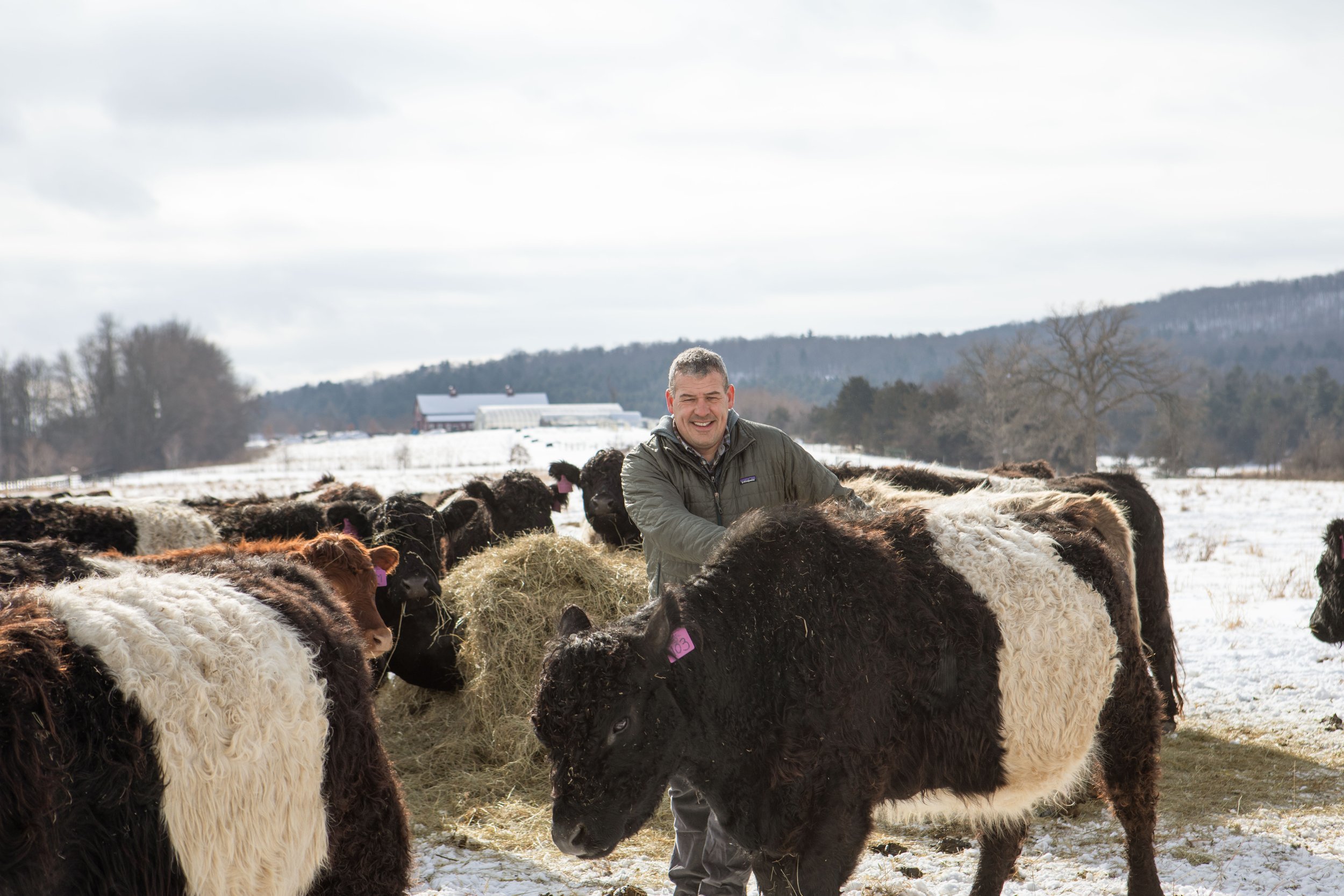
Ed Pitcavage, Livestock & Grazing Manager
Our livestock program includes cattle, sheep, pigs, and poultry, all raised primarily on pasture. While piglets arrive at the farm at eight weeks old and poultry arrive as days-old chicks, our cattle and sheep are born on the farm and are part of a multi-generational effort to develop healthy, resilient herds that thrive in our climate and on grass. The goal is not simply to produce high-quality meat, but to steward the land responsibly while supporting animal health from birth through maturity.
The Belted Galloway Herd
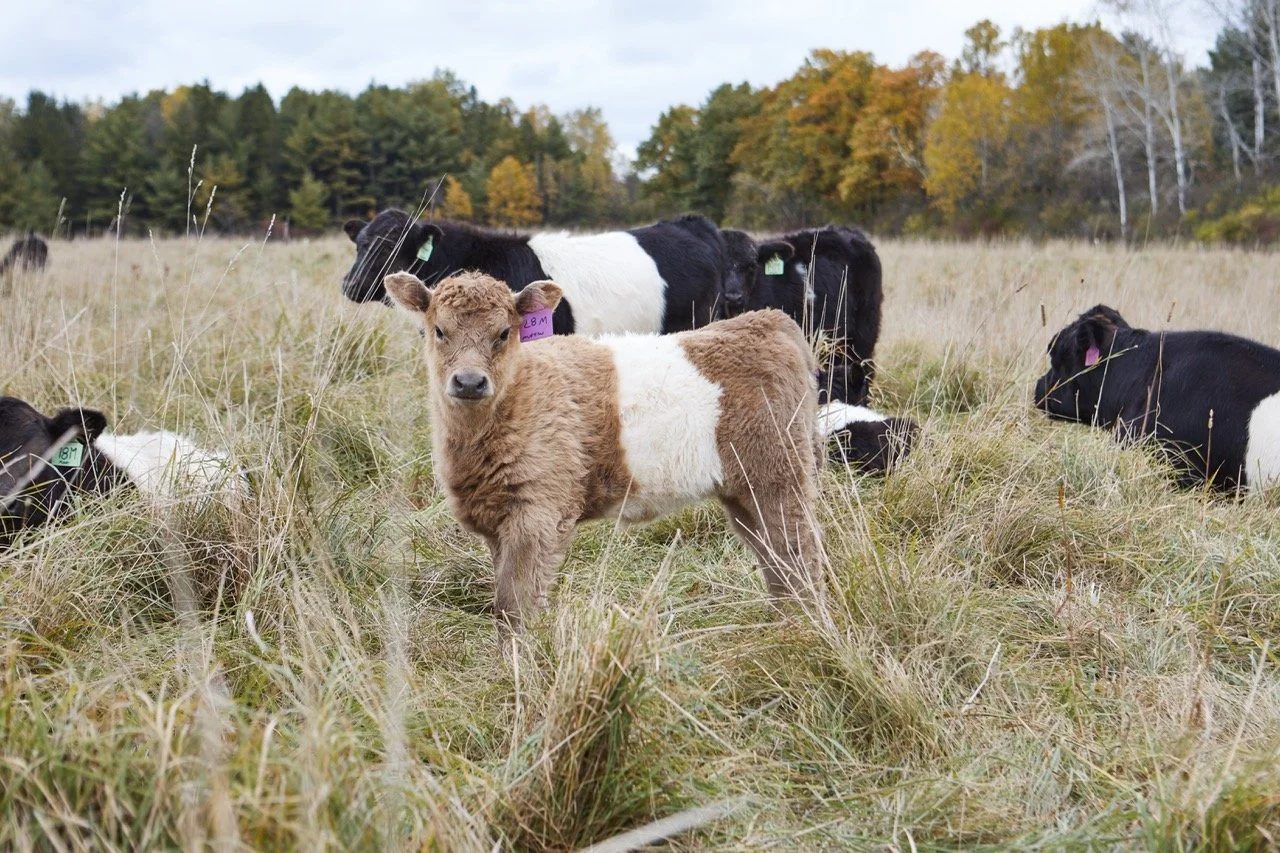
Our cattle program centers on a herd of Belted Galloways, a heritage breed well suited to grass-based farming in northern climates. Known for their hardiness, a moderate frame size, calm temperament, and ability to thrive on forage alone, Belted Galloways align closely with our goals for animal welfare, regenerative land management, and grass-fed beef production.
Breeding within the herd is carefully planned and managed seasonally. A sire is a male breeding animal used for reproduction within a herd. With cattle, the sire is the bull that mates with cows and contributes half of the genetic makeup to each calf. Depending on our goals in a given year, we may use more than one sire. One of our bulls, Jelly Beans, is a purebred Belted Galloway and is considered our herd sire. We’ve also added a new herd sire, a purebred Belted Galloway named Noble, that will replace Jelly Bean later this year. A herd sire helps us maintain a strong, consistent Belted Galloway genetic line and preserve the core characteristics of our brood herd. A brood herd (sometimes called a breeding herd) refers to the group of female cows on our farm that are retained for reproduction rather than raised for meat. The brood herd consists of purebred Belted Galloway mature cows and selected heifers (female cows that have not yet had a calf) that are bred each season to produce calves.
“The goal is not simply to produce high-quality meat, but to steward the land responsibly while supporting animal health from birth through maturity.”
More recently, we began incorporating additional terminal sire breeds, such as Angus or Red Devon, into our finishing herd (sometimes called a terminal sire herd). The finishing herd includes animals that are raised specifically for meat and are not intended to be bred. These terminal sire breeds are well adapted to grass-based systems and are selected for their finishing traits and forage efficiency.
Crossbreeding with Angus or Red Devon genetics allows us to take advantage of hybrid vigor, a well-documented effect in which offspring from two different breeds often show improved performance compared to either parent breed alone. In practice, this can mean better growth rates, improved resilience, and more efficient use of forage. In our system, hybrid vigor also contributes to beef texture and flavor, while still producing animals that thrive in our climate and under our pasture-based management.
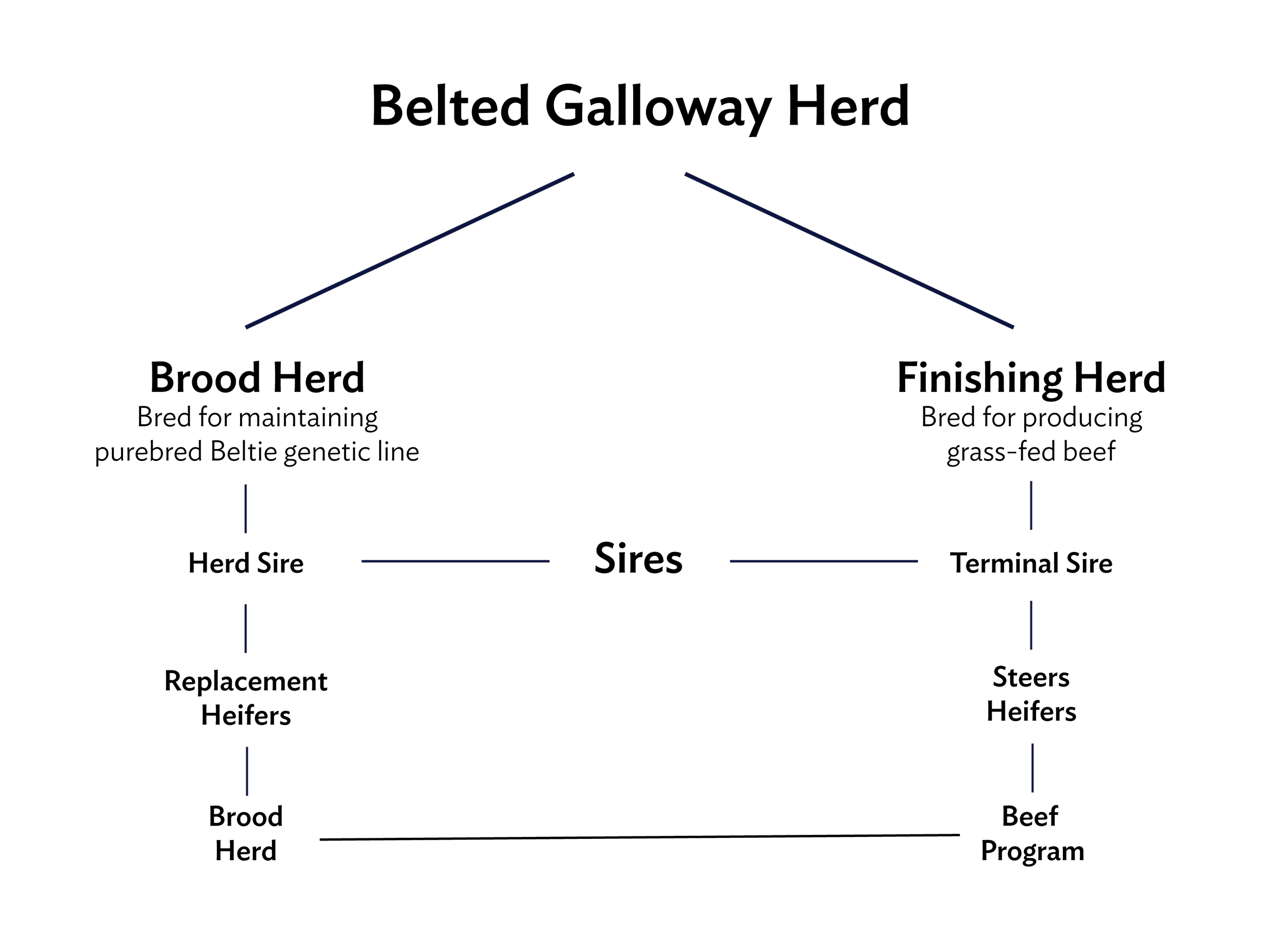
Breeding at the farm follows an extended and intentionally flexible schedule rather than a single, tightly concentrated window. Each year, the herd is divided into two groups, a purebred group (the brood herd) and a terminal sire group (the finished herd), beginning August 1. This timing aligns with a target calving start date around May 10, when pasture conditions are typically at their best. Rather than breeding all cows at once, younger cows are held back and introduced to bulls later in the season. This approach spreads calving from mid-May through early July, with a smaller group calving again in early fall.
Unlike many beef operations that aim for a highly uniform calf crop, we extend our calving season to maintain flexibility later in the production cycle. This staggered timing allows us to plan for harvesting animals over a longer window, typically 24 to 30 months later, so we can finish and harvest cattle on grass throughout the year. Our goal is to harvest three to four finished animals each month, ensuring a consistent supply of fresh, grass-fed beef for both the dining program and the Market.
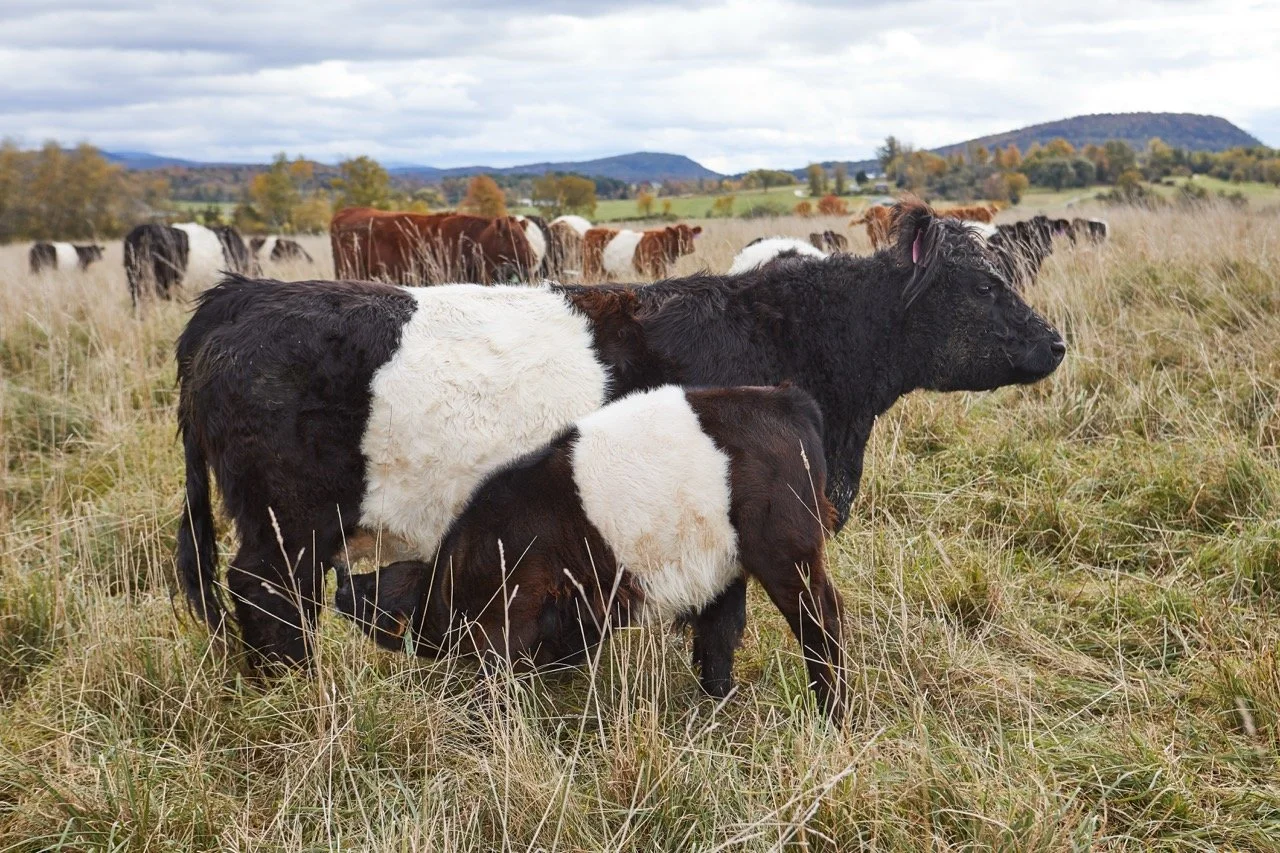
Using terminal sires and hybrid vigor supports this approach by creating animals that finish at different rates. Crossbred cattle are typically harvested between 22 and 24 months of age, while purebred Belted Galloways mature more slowly and are harvested closer to 28 to 30 months. Together, this system allows us to align animal growth, pasture conditions, and harvest timing in a way that supports animal health, land stewardship, and year-round production.
Calves are always born and raised on pasture. They remain with their mothers for several months, nursing and learning herd behavior before weaning at 8 months. After weaning, calves are grouped by sex and managed according to their role in the herd. Heifer calves are evaluated for temperament, structure, maternal traits, and overall health. A small number may be retained as future breeding animals and added to the brood herd, gradually replacing older cows and helping maintain genetics that are well adapted to the farm. Heifers not selected for breeding are raised for beef. Bull calves are raised for meat rather than breeding. Shortly after birth, they are castrated and then referred to as steers. Shortly after the purebred brood herd is bred by the herd sire, those animals are returned to the larger finishing herd so the cattle can live and graze together. Maintaining a unified herd supports natural social behavior, reduces stress, and results in calmer animals overall.
Over time, these breeding and selection practices help shape a herd that is well matched to both the land and our management system. By balancing genetic preservation with thoughtful improvement, we aim to demonstrate a transparent, responsible approach to cattle husbandry that supports animal well-being, ecological health, and high-quality beef.
The Sheep Flock
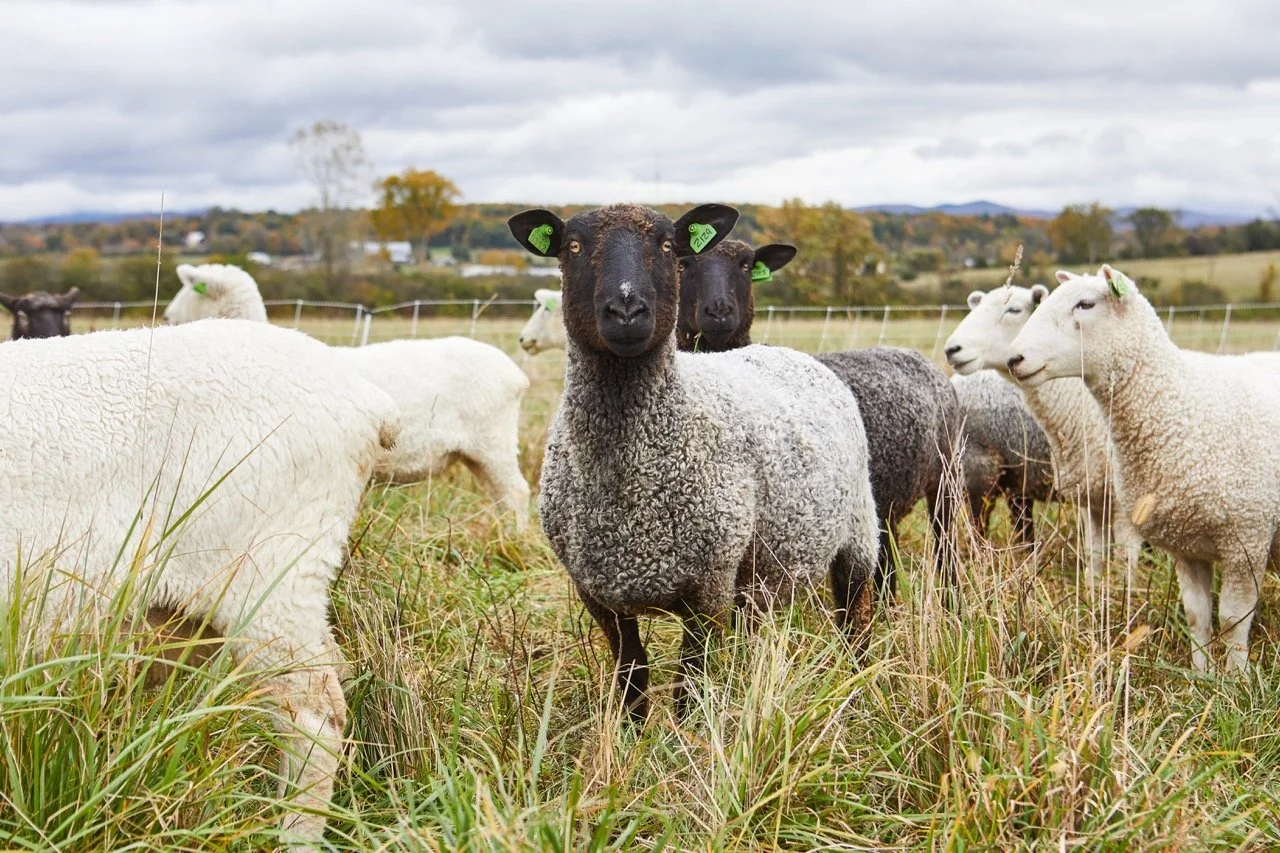
Sheep breeding at Philo Ridge Farm follows a similar balance of long-term stewardship and intentional production. The foundation of the flock is built on a Border Leicester–Romney cross, selected for strong maternal traits including hardiness, good mothering, and suitability for life on pasture. They also produce beautiful fleece. Each year, a small group of ewes is bred specifically to maintain this core genetics, with female lambs retained as future mothers. The majority of the flock is bred to a terminal sire chosen for meat quality, currently a Texel ram, named Doofenshmirtz, known for excellent muscling and finishing ability. Lambs from this pairing are raised entirely on pasture and harvested in the fall through winter, producing grass-fed lamb with depth of flavor while allowing the farm to strengthen meat quality without compromising the health and resilience of the breeding flock.